

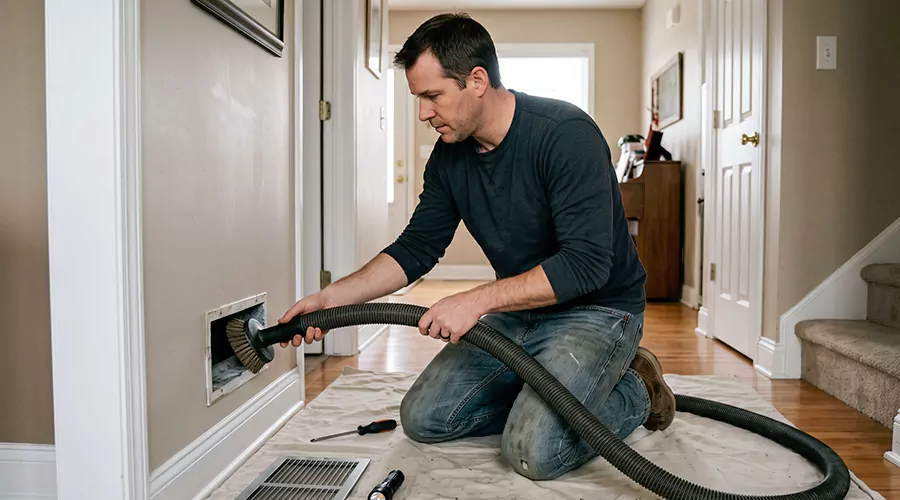
HVAC duct cleaning typically includes inspecting the air distribution system, removing deposited dust from affected supply and return ducts, cleaning registers and grilles, and checking the connected components included in the service agreement. Professional cleaning generally uses agitation tools and controlled vacuum collection to remove debris without spreading it through occupied rooms. The exact scope varies by contractor and the condition of the system.
An HVAC system contains more than the visible vents in each room. Supply ducts deliver heated or cooled air, while return ducts carry indoor air back toward the equipment. The system also includes main duct trunks, plenums, and components associated with the furnace or air handler. Dust and debris can accumulate in different locations, so cleaning one part does not necessarily address contamination elsewhere.
A complete cleaning service should be based on an inspection and a clearly defined work order. Some companies offer only register cleaning, while others include the supply and return duct network and relevant HVAC equipment. Understanding these differences helps homeowners decide whether the proposed service addresses the actual problem.
The Environmental Protection Agency recommends cleaning ducts when specific conditions justify it rather than simply because a fixed amount of time has passed. Substantial contamination may require professional removal, but ordinary dust on an accessible grille can often be cleaned without a whole-system service.
What Parts of an HVAC System Are Included in Duct Cleaning?
Professional HVAC cleaning may address several connected components, depending on where contamination exists. The National Air Duct Cleaners Association recommends a system-based approach because leaving relevant contaminated components untreated can allow deposits to move into cleaned areas again.
However, not every company automatically includes every component in its standard price. The work order should specify the ducts and equipment being addressed. The cleaning method must also be appropriate for the material and condition of each component.
| HVAC Component | What Cleaning May Involve |
|---|---|
| Supply air ducts | Removing deposited dust and debris from branches |
| Return air ducts | Removing particles from return passages |
| Supply registers | Cleaning accessible covers and openings |
| Return grilles | Removing accumulated surface dust |
| Main duct trunks | Cleaning larger passages connecting branches |
| Supply and return plenums | Removing appropriate deposits from accessible chambers |
| Blower assembly | Cleaning affected fan blades and housing |
| Air handler cabinet | Removing debris from accessible cabinet surfaces |
| Cooling coil | Inspection and suitable coil cleaning when needed |
| Condensate drain pan | Removing deposits and checking drainage |
| Furnace heat exchanger | Qualified inspection and applicable cleaning |
| HVAC filter | Checking condition and replacing when necessary |
This table describes components that can be involved in an HVAC cleaning project. It does not mean every home needs all of them cleaned during every visit. The extent of work should follow the contamination found and the service agreement.
A duct-cleaning company may need an HVAC service technician for components requiring specialized access or handling. Cleaning the air distribution system and servicing combustion equipment are related but different tasks. The contractor should identify who is qualified to perform each part.
Does HVAC Duct Cleaning Include Supply Air Ducts?
Supply ducts carry conditioned air from the HVAC equipment to registers throughout the home. A cleaning service covering the supply network should address the applicable branches and main supply passages. Simply vacuuming the grille at the room opening does not clean the connected duct.
A contractor may use specialized brushes or air agitation tools to loosen deposits inside suitable ducts. Vacuum collection equipment captures the material as it is released. The method depends on whether the duct is rigid metal or contains a flexible liner or internal insulation.
Supply branches may differ in length and accessibility. Some can be reached through existing registers, while others require approved service openings. The contractor should explain how the ducts will be cleaned and how any temporary openings will be restored.
When the ducts contain ordinary light dust, cleaning may not be necessary. The decision should reflect observed contamination rather than an assumption that every branch needs treatment because one register looks dusty.
Does HVAC Cleaning Include Return Air Ducts?
Return ducts are an important part of the air distribution system because they carry indoor air back toward the furnace or air handler. Dust may collect along the return path, particularly where air passes through large grilles. A service described as whole-system duct cleaning should clearly address the returns when they are part of the affected system.
Return openings can be larger than supply vents, and the ductwork behind them may have a different shape or construction. In some homes, building cavities form part of the return path. Cleaning methods should account for the actual design rather than assume all returns are conventional sheet metal ducts.
The filter housing is another area worth checking because gaps around a filter can allow particles to bypass it. The technician should inspect the filter's fit and visible condition. A cleaning service does not need to replace a sound filter automatically, but unsuitable or heavily loaded filters should be addressed.
Cleaning return ducts without correcting a damaged connection may allow contamination to return. Repairing an opening that draws air from an attic or crawlspace can be more important than repeatedly removing the resulting dust deposits.
Are Vents and Registers Included in HVAC Duct Cleaning?
Many professional duct cleaning packages include cleaning the accessible supply registers and return grilles. These covers collect visible dust as air moves through their openings. The technician may vacuum or wipe them, and removable covers may be cleaned separately when their material permits.
Register cleaning is one of the most visible parts of the service, but it represents only a small portion of the full HVAC system. A clean-looking grille does not confirm that the connected duct has been treated. Homeowners should ask whether the company cleans only the covers or the branches behind them.
The covers should be reinstalled securely after cleaning. Adjustable louvers should remain functional and in their intended positions. A grille that is bent or installed incorrectly can cause rattling or interfere with normal airflow.
For ordinary surface dust, homeowners can often clean the register covers themselves. Professional duct cleaning is more appropriate when significant internal contamination has been documented.
Does Air Duct Cleaning Include the Furnace or Air Handler?
Some HVAC duct cleaning packages include certain furnace or air handler components, while others charge for equipment cleaning separately. The furnace or air handler contains the blower and other parts that move air through the ducts. Deposits on these components may require cleaning when they are affected by contamination.
The blower housing can collect dust that passes through or around filtration. A cleaning contractor may inspect and remove deposits using methods suitable for the equipment. However, disassembling motors or electrical assemblies requires appropriate qualifications.
The air handler cabinet should also be considered when the connected ducts are significantly contaminated. Debris remaining inside the cabinet can affect the system after duct cleaning. A system-based cleaning plan should account for the parts that can contribute to recontamination.
Fuel-burning furnaces require additional caution because they include combustion components and exhaust venting. Ordinary duct cleaners should not dismantle burners or heat exchangers unless they are qualified to perform that work. Combustion safety inspection is part of furnace maintenance, not simply another duct-cleaning step.
Are HVAC Coils and Drain Pans Included?
Cooling coils and condensate drain pans are associated with moisture removal during air conditioning operation. Dust can collect on the cooling coil, while the drain pan can accumulate deposits if moisture and debris remain present. These components may need cleaning when inspection indicates a problem.
However, coil cleaning is not always included in a basic duct-cleaning quote. The contractor may provide it as a separate HVAC maintenance service because coils require different procedures and cleaning products from ordinary ducts. The work should avoid bending delicate coil fins or damaging electrical equipment.
The condensate pan should drain properly after service. A blocked drain is a separate mechanical problem that may require additional work. Spraying deodorizer into a duct is not a substitute for correcting standing water or drainage failure.
When the system contains moisture-related contamination, the source of water must be addressed. Cleaning deposits without correcting the moisture problem can allow the condition to return.
What Is Not Normally Included in Standard HVAC Duct Cleaning?
A standard cleaning service removes appropriate dust and debris from the components identified in the work order. It does not automatically include mechanical repairs or specialized contamination remediation. Understanding exclusions helps homeowners avoid paying for services they did not expect.
| Service | Usually Separate From Basic Duct Cleaning? |
|---|---|
| Repairing disconnected ducts | Yes |
| Sealing air leaks | Yes |
| Replacing crushed flexible ductwork | Yes |
| Replacing damaged duct insulation | Yes |
| Mold remediation | Yes, requires condition-specific assessment |
| Pest removal | Yes |
| Asbestos assessment or abatement | Yes |
| Refrigerant leak repair | Yes |
| Furnace combustion testing or repairs | Often separate HVAC service |
| Dryer exhaust cleaning | Yes, separate ventilation system |
| New duct installation | Yes |
Some companies offer combination packages, so individual services may be bundled into one price. The written quote should still distinguish ordinary cleaning from repair or remediation. These tasks use different methods and may require different qualifications.
A company should not add chemical fogging automatically because ducts contain normal household dust. Any antimicrobial product must be suitable for the specific HVAC application and used according to its labeling. Chemical treatment also cannot repair wet insulation or remove a physical blockage.
What Happens During a Professional HVAC Duct Cleaning?
A professional cleaning project should follow an organized procedure that begins with inspection and ends with checking the completed work. The approach should be adapted to the duct construction and identified contamination. A contractor should also protect the living space and prevent disturbed debris from spreading during cleaning.
Step 1. Inspect the Existing System
The technician identifies the HVAC equipment and examines accessible ductwork. This establishes the number of systems and the types of ducts involved. The inspection should also look for loose connections or damaged materials that could make a cleaning method unsuitable.
When possible, visible contamination is documented before work begins. Photographs or a camera may be used to examine concealed passages. The contractor should explain which areas need cleaning and why.
Step 2. Establish the Cleaning Scope
The work order should identify the supply and return ducts and relevant HVAC components to be addressed. It should also explain any exclusions or areas that cannot be accessed. This allows the homeowner to understand what the cleaning price covers.
If damage or unusual contamination is found, additional work should be discussed before proceeding. A contractor should not treat a newly discovered pest infestation or deteriorated insulation as ordinary dust. These conditions may require another specialist.
Step 3. Protect the Home and Equipment
The technician prepares access points and protects nearby furnishings where necessary. The HVAC equipment is shut down and handled according to the cleaning plan. Suitable containment helps limit dust entering occupied areas while work is underway.
Care should be taken around electrical assemblies and combustion equipment. Ordinary duct cleaning does not authorize unsafe access to furnace components. Any required equipment disassembly should be performed by qualified personnel.
Step 4. Connect Vacuum Collection Equipment
Professional source removal uses collection equipment to capture loosened dust and debris. Negative pressure can help direct disturbed particles toward the vacuum rather than into the rooms. When vacuum exhaust is released indoors, suitable HEPA filtration is important.
Collection equipment should remain appropriate for the size and configuration of the system. Insufficient collection can spread more dust than the cleaning removes. The contractor should be able to describe how airborne debris is controlled.
Step 5. Clean the Supply and Return Ducts
The technician uses suitable brushes or air agitation tools to loosen deposited material from the affected duct surfaces. The vacuum system collects the released debris. Each section should be addressed in an organized sequence according to the cleaning plan.
Delicate ducts require gentler methods. Flexible liners and fiberglass duct board can be damaged by aggressive brushing. The contractor should adjust the equipment rather than force a tool through unsuitable material.
Step 6. Clean Relevant HVAC Components
Affected plenums and cabinet areas may be cleaned as specified in the work order. The blower and other equipment components require methods appropriate for their construction. Any specialized coil or furnace work should be completed by personnel qualified for that equipment.
Cleaning should remove the material rather than simply dislodge it into another part of the system. When one affected component is omitted, residual deposits may remain available for redistribution. This is why a system-based scope is valuable when significant contamination exists.
Step 7. Restore Access Openings
Temporary cleaning access points should be closed securely after work is finished. The repaired openings must remain airtight and suitable for normal HVAC operation. Insulation removed to reach a duct should also be restored where appropriate.
Loose or unsealed access doors can create new air leaks. A cleaning service should leave the ductwork in sound condition rather than introduce additional defects. The contractor should inspect these areas before restarting the system.
Step 8. Verify Cleaning Results
Visual inspection can help confirm that substantial deposits have been removed from the accessible system components. Photos may be used to document conditions before and after cleaning. The contractor should explain any areas that could not be adequately reached.
The completed work should also be checked for damaged connections or missing covers. A clean duct with a loose fitting can still create comfort problems. Verification should therefore include the condition of the duct system, not only its appearance.
Step 9. Restore Normal HVAC Operation
Once the equipment is assembled, normal operation can be restored. The technician should confirm that the blower and registers function as expected. Any unusual noises or airflow problems discovered after cleaning should be investigated.
A suitable HVAC filter should be installed if replacement is needed. Routine maintenance can then continue according to the equipment manufacturer's instructions. The cleaning appointment should conclude with a clear explanation of what was completed.
What Cleaning Methods Are Used in HVAC Duct Cleaning?
Professional duct cleaning methods generally rely on source removal. This means loosening deposited contaminants and collecting them rather than simply moving them into another area. The tools vary according to duct material and accessibility.
Mechanical agitation may involve specialized brushes or air tools. Suitable vacuum collection equipment removes loosened debris from the passage. Some systems require a combination of techniques because their duct layout contains several types of materials.
The National Air Duct Cleaners Association's 2025 ACR standard addresses inspection and assessment, cleaning procedures, containment, and cleanliness verification. Contractors following recognized procedures should explain how their method protects the ductwork and removes the identified deposits.
Cleaning with household disinfectants is not an equivalent method. Chemicals do not replace physical debris removal. If a special treatment is proposed, its suitability and purpose should be established before use.
How Long Does HVAC Duct Cleaning Take?
Residential HVAC duct cleaning can take approximately three to eight hours, depending on the number of systems and accessibility. Larger or complicated installations may require additional time. The duration also depends on whether related equipment components are included.
The number of vents does not determine the entire schedule. A property with one accessible system may be simpler to clean than a smaller home containing concealed returns and multiple air handlers. The contractor should provide a reasonable time estimate after reviewing the work.
A short appointment that only vacuums visible grilles should not be represented as a complete whole-system cleaning. Source removal requires preparation and access to relevant duct sections. Verification and restoration of the system also take time.
How Do You Know if the Cleaning Was Done Properly?
A completed HVAC cleaning should remove substantial visible deposits from the components identified in the work scope. The contractor should be able to show the results through direct visual inspection or suitable photographs. The system should also operate normally after cleaning.
Use the following checklist:
- Were the supply ducts included in the agreed service?
- Were the return ducts cleaned where required?
- Were registers and grilles restored securely?
- Were applicable main trunks and plenums addressed?
- Were relevant equipment components included as promised?
- Was loosened debris collected rather than released indoors?
- Were cleaning access openings closed and sealed?
- Was duct insulation restored where it was disturbed?
- Were any damaged sections documented?
- Does the HVAC system operate normally after service?
Not every hidden surface will be visible without specialized equipment. However, the provider should demonstrate that the agreed areas were addressed. If substantial visible debris remains in a cleaned section, ask for the condition to be corrected before accepting the work as complete.
Does HVAC Duct Cleaning Include Sanitizing or Deodorizing?
Sanitizing and deodorizing are not automatically necessary parts of ordinary duct cleaning. Most standard dust-removal work involves physical collection rather than chemical treatment. A clean HVAC system does not need to be sprayed simply because a contractor offers an add-on.
The EPA cautions that the effectiveness and potential consequences of chemical products used inside duct systems must be carefully considered. Products also differ in what surfaces and applications their labels permit. Internally insulated ducts present special limitations.
Odors may originate from water-damaged materials or other building sources rather than the ducts themselves. Spraying fragrance into the system can conceal an odor without correcting its cause. Any treatment proposal should identify the underlying condition and explain why the product is appropriate.
How Much Does HVAC Duct Cleaning Cost?
Published U.S. estimates for 2026 place many residential duct-cleaning projects between $271 and $509, with an average around $390. More involved whole-house services can cost $450 to $1,000 or more. The difference largely reflects system size and the components included in the scope.
A low-cost offer may cover only selected vent openings, while a larger quote may include main ducts and additional HVAC components. Neither price can be evaluated fairly without knowing the work involved. Homeowners should request written descriptions rather than compare totals alone.
Mold remediation and physical duct repairs can create separate costs when necessary. Those services should not be assumed to be included in ordinary dust cleaning. The contractor should discuss additional work before beginning it.
When Is Professional HVAC Cleaning Necessary?
The EPA advises considering duct cleaning when there is substantial visible mold on suitable hard-surface ducts or HVAC components, a vermin infestation, or excessive dust and debris being released from supply registers. These conditions justify closer inspection and may support cleaning. Ordinary dust on return grilles does not establish the same need.
A moisture problem should be corrected before cleaning when wet material is involved. Likewise, pest entry points should be repaired so the system does not become contaminated again. Cleaning without addressing the original cause may provide only temporary results.
Professional evaluation is also appropriate when the system contains unfamiliar older insulation or damaged internal liners. Some materials should not be disturbed using standard mechanical tools. The cleaning method must match the actual duct construction.
How Can You Keep an HVAC System Cleaner After Service?
Regular filter maintenance helps reduce unwanted particles entering downstream components. Check the filter according to the HVAC manufacturer's instructions and confirm that it fits correctly. A damaged or missing filter can allow dust to bypass the intended filtration path.
Inspect accessible return connections for gaps that may draw air from attics or crawlspaces. Repairing these openings can reduce unwanted debris entering the system. Keep cooling equipment drainage areas in suitable condition so moisture does not accumulate around the air handler.
During renovations, protect duct openings from construction debris and avoid operating the system during dusty work when practical. Remove temporary coverings before returning the equipment to service. These measures help reduce the need for repeated cleaning.
Conclusion
HVAC duct cleaning can include supply and return ducts, registers, plenums, and relevant HVAC equipment components. The exact work depends on the condition of the system and the contractor's agreement. Professional cleaning should physically remove debris using methods compatible with the duct materials and suitable collection equipment. It should not automatically include unrelated repairs or chemical treatments. Before scheduling, request a written scope identifying every component that will be inspected and cleaned.